

What a barn owl actually needs
Posted by PelletPal Team on Oct 16th 2026
This article first appeared on pelletpal.net/learn, where it has an interactive kid-friendly version.
Rough grass to hunt, a dark cavity to nest, and a corridor between them. Barn owls live on every continent except Antarctica, yet they vanish from tidy landscapes. The reason comes down to three requirements that modern farming quietly removed.
Rough grass, not lawn
Barn owls hunt on the wing, low and slow over open ground, listening. What they need underneath is a thick thatch of ungrazed, unmown grass — the layer where voles build runways and breed. A closely mown or heavily grazed field can look green and healthy while supporting almost no small mammals at all. Rough field margins just a few metres wide can carry the majority of a farm’s vole population.
For younger readers: Barn owls hunt over long messy grass, because that is where voles live. A neat mown field is empty.
A dark, dry cavity
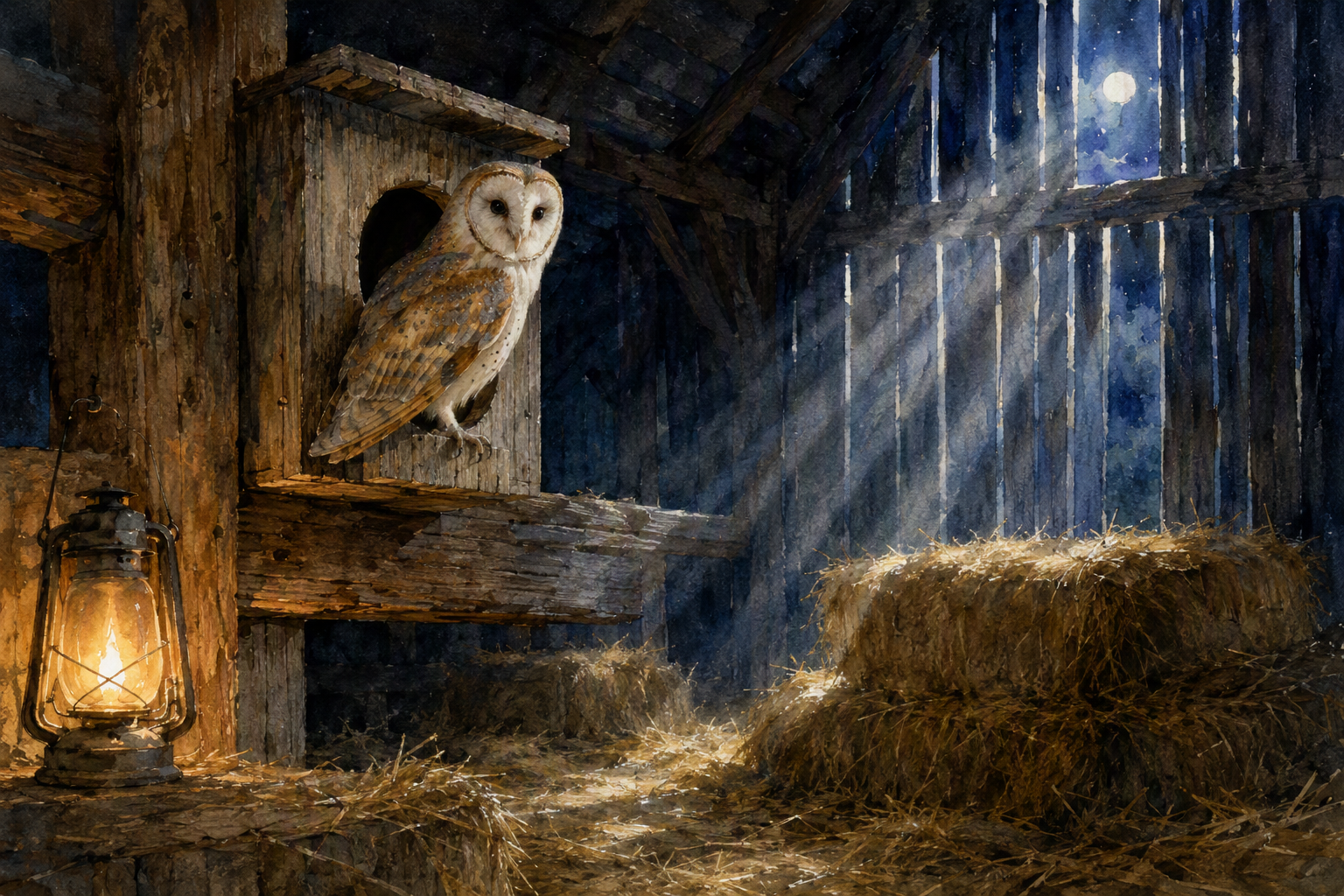
Barn owls construct no nest. They require a pre-existing cavity: a hollow veteran tree, a cliff crevice, a loft, or the dark corner of a barn — hence the name. Two twentieth-century trends removed most of these at once. Old hollow trees were felled, and draughty timber barns were replaced with sealed steel sheds. In much of the barn owl’s range, nest sites became scarcer than food, which is precisely why a well-placed nest box can be occupied within a single season.
For younger readers: They do not build nests. They need a hole — in a barn, a hollow tree, or a nest box.
Corridors to travel along
Hedgerows, ditch banks, tree lines and rough verges function as hunting corridors and as shelter from wind. Remove them and a landscape may hold plenty of prey while remaining effectively unreachable, with young owls exposed as they disperse. Roadside verges are a special problem: they are excellent rough grassland, which draws owls to hunt at car height, making vehicle collision a leading cause of death in many regions.
For younger readers: Hedges are like roads for owls. They follow them from the nest to good hunting places.
Three things, in the same place
The requirements are not independent. A farm with superb rough grassland and no cavity holds no breeding owls. A barn full of nest boxes surrounded by mown monoculture holds none either. Conservation that works therefore addresses all three together: install boxes, leave uncut margins, and reconnect hedgerows. The good news is that barn owls respond fast — often within one breeding season — because their problem is usually habitat rather than the birds themselves.
For younger readers: Food, a nest hole, and safe routes between them — all close together. Miss one and no owls.
Key takeaways
- Rough, unmown grass is the hunting habitat that matters.
- Barn owls need a cavity and build no nest of their own.
- Hedgerows act as travel corridors and shelter.
- All three needs must overlap in one place.
Try it yourself with a Pack of 5 or, for a class, the Pack of 20.