

Predator and prey, and the loop between them
Posted by PelletPal Team on Oct 16th 2026
This article first appeared on pelletpal.net/learn, where it has an interactive kid-friendly version.
Why owl numbers chase vole numbers around in circles. Predators do not simply reduce prey. The two populations pull on each other in a delayed cycle — and a pile of pellets is one of the best records of that cycle anyone has found.
The chase, in numbers
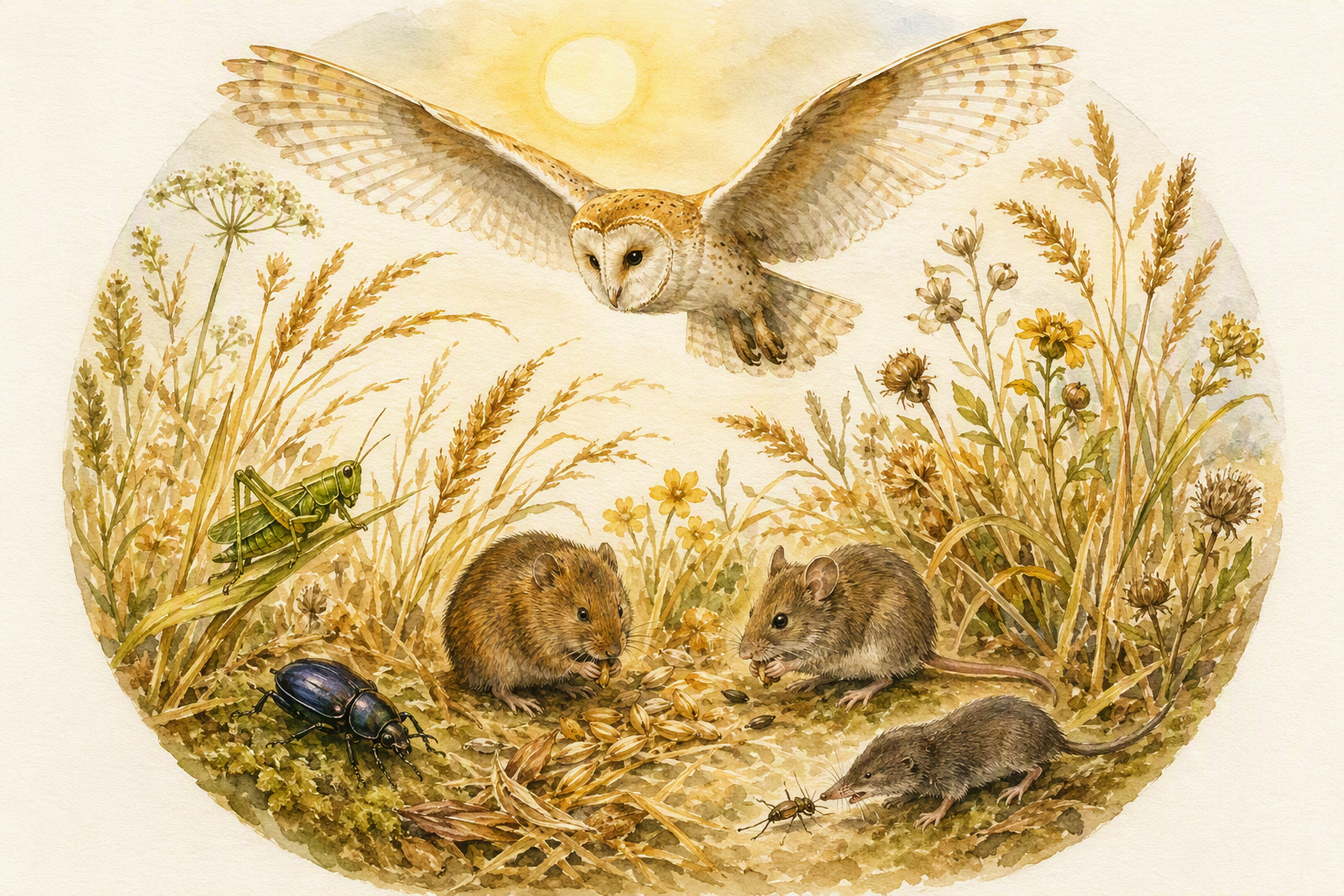
When vole numbers rise, barn owls lay bigger clutches and more chicks survive, so the owl population climbs — but it climbs late, because raising an owl takes time. By the time owl numbers peak, the voles they depend on have already been thinned. Owl breeding then fails, owl numbers fall, and the surviving voles rebound. Plot both lines and you get two waves chasing each other, the predator always lagging behind the prey.
For younger readers: Lots of voles means owls raise lots of chicks. Lots of owls means fewer voles. Then fewer owls. Then more voles again.
Predators are not the enemy
Remove the predator and prey does not simply flourish — it overshoots, strips the vegetation it depends on, and then crashes far harder than any predator would have made it. Predation also selects: the animals caught are disproportionately the sick, the slow and the inexperienced. In grain-growing regions, a nesting pair of barn owls plus their brood may remove well over a thousand rodents in a season, which is real, measurable pest control performed for free.
For younger readers: Predators stop prey from eating all the plants. That keeps the whole meadow healthy.
Reading the loop in a pellet
Diet composition is a signal, not just a list. A run of pellets dominated by voles indicates abundant prey and a comfortable owl. A sudden spread across shrews, mice and small birds usually means the preferred prey has become scarce or inaccessible — deep snow, prolonged rain, a flooded field or a freshly cut meadow. This is why long pellet series from a single roost are so valuable: the shifting proportions record the ecology of the surrounding land year by year.
For younger readers: If almost every pellet holds voles, it was a good vole year. If you find birds and shrews instead, voles were hard to find.
Energy leaks at every step
Roughly a tenth of the energy at one trophic level makes it into the next; the rest is spent living or lost as heat. That single fact dictates the shape of every food web. It takes an enormous quantity of grass to build the voles required to build one owl, so apex predators are always rare, always need large territories, and are always the first to feel damage lower down the web.
For younger readers: Only a small bit of the energy in grass makes it into an owl. That is why there are far fewer owls than voles.
Key takeaways
- Predator numbers lag behind prey numbers, producing cycles.
- Removing predators destabilises prey rather than helping it.
- Diet variety in pellets is a warning sign that preferred prey is scarce.
- About 90% of energy is lost at each step up the web.
Try it yourself with a Pack of 5 or, for a class, the Pack of 20.